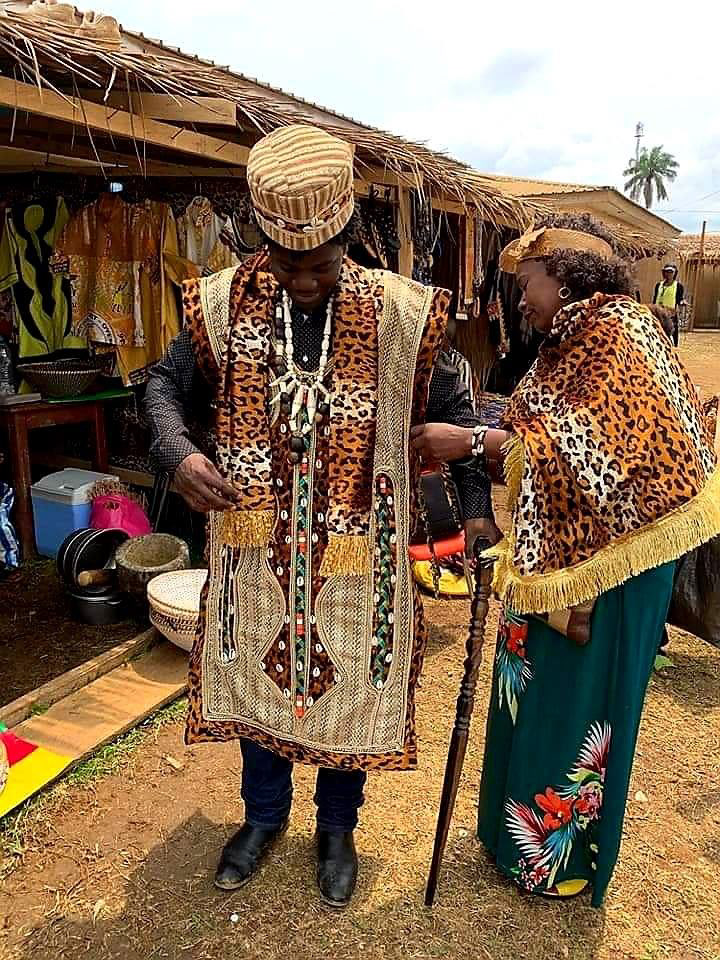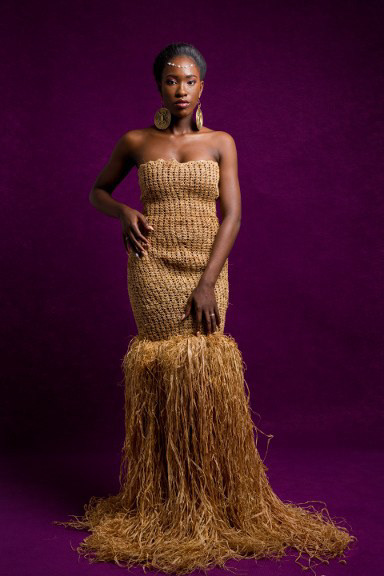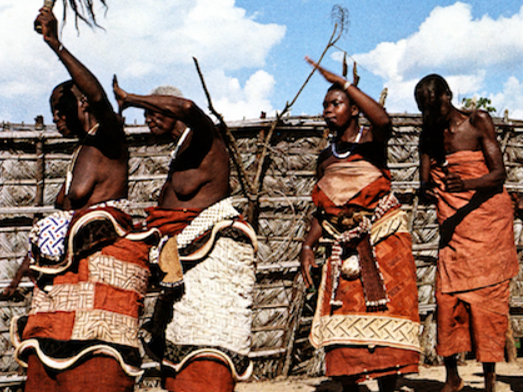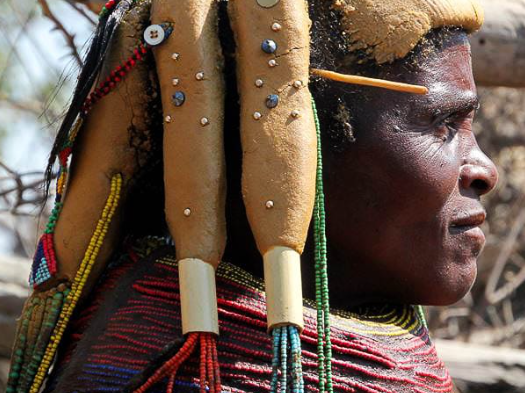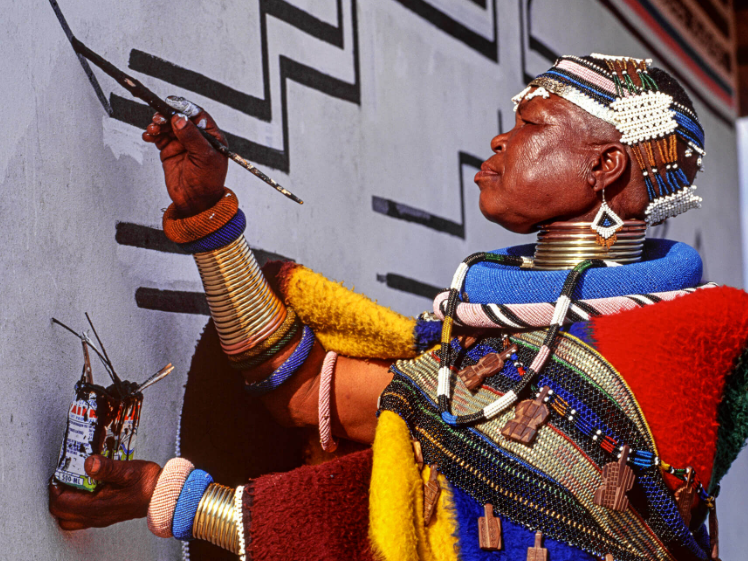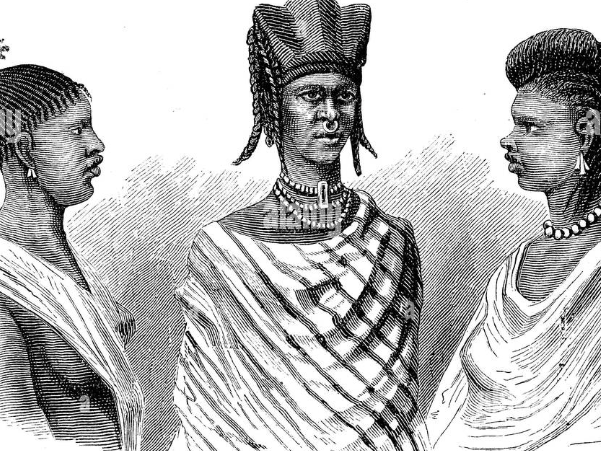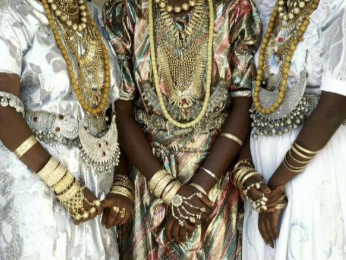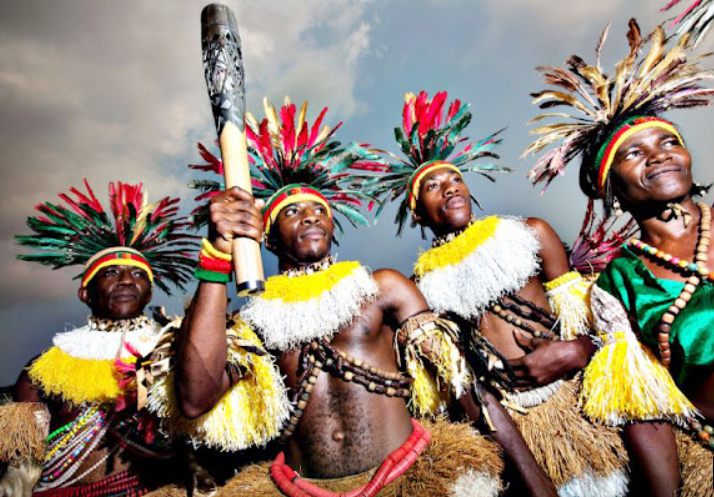
Beti people are coming from the bulu people, are made of more than 20 individuals clans. They inhabit a territory of forests and rolling hills were they produces yams, cassava corn and plantains.
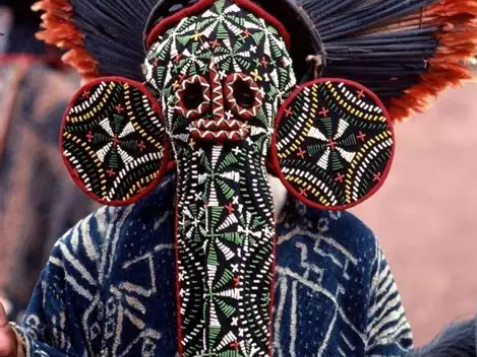
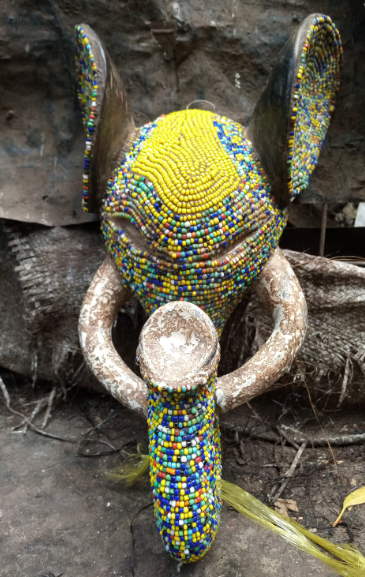
Known as skilled artist who create boxes (Byeri) where they keep the bones of their ancestors and sophisticated masks called So (animal-faced) and Ngil (human-faced).
“The history of clothing among the Ekang people, which includes us, is as follows. Initially, we wore the 'mendjack .' These were simply woven leaves used as loincloths to protect the genitals and torso. After the 'mendjack,' we wore animal skins. Then, when weaving techniques developed, we wore frills made of woven raffia. Later, we discovered obom, which involves harvesting certain plant species to obtain a fabric of the same name. It was obom that we wore when the colonizers arrived. In Bulu, the names ' nkam obom , ' ' olos obom ,' ' afo'olo obom ' refer to the different types of clothing that can be made from this plant material,” explains the man, who is also a traditional initiate.
Obom it refers to a type of wood from the equatorial forest, how they create the traditional attire made from inner barks and specific forest trees creating a sturdy and beautiful garments. It has served as everyday wear as a ceremonial dress based in craftsmanship social hierarchy, and ritual identity. In today's world Obom is experiencing a revival as artisans and researchers explore sustainable, biodegradable textiles.
Bark is carefully removed from living or cut trees.
It is softened, then pounded with a special wooden mallet.
The sheet is soaked for days to remove sap, then sun‑dried and polished.
Some artisans add finishing touches like repolishing or ironing for sheen.
This textile became a marker of nobility among Ekang/Beti groups, associated with dignity, elegance, and ancestral prestige.