NDEBELE PEOPLE
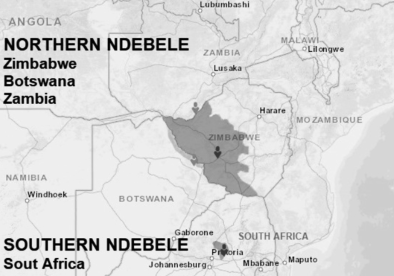
The Ndebele have their roots in the Nguni people who migrated during the Bantu migrations from southern to eastern Africa. Mpumalanga and Gauteng in South Africa, and a separate group, the Matabele, moved north into what is now Zimbabwe.
They are a patrilineal society.
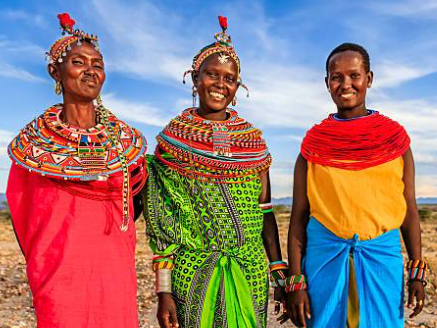
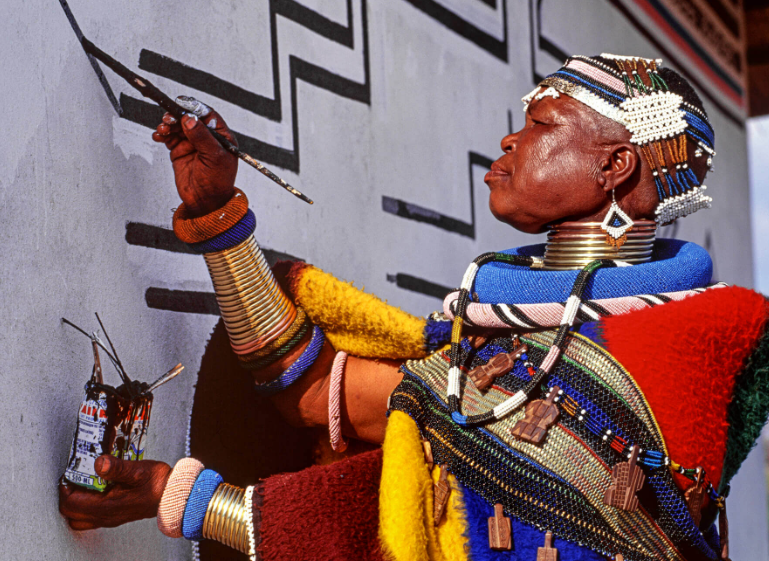
Women's clothing after marriage is more elaborate. They fill their arms, legs and neck with copper and brass as a symbol of loyalty to their husbands, which can be removed after their husband's death. These accessories are called Idzila, though it is not such a common practice nowadays. They use grass neck hoops called Isigolwani, especially for ceremonies. Some clothing is worn to commemorate significant life events like the Ijogolo (apron worn when giving birth to their first child) and nguba (carpet worn at marriage).
Ububendle beaded apron for young girls.
Utshananda pleated black skirt for older girls.
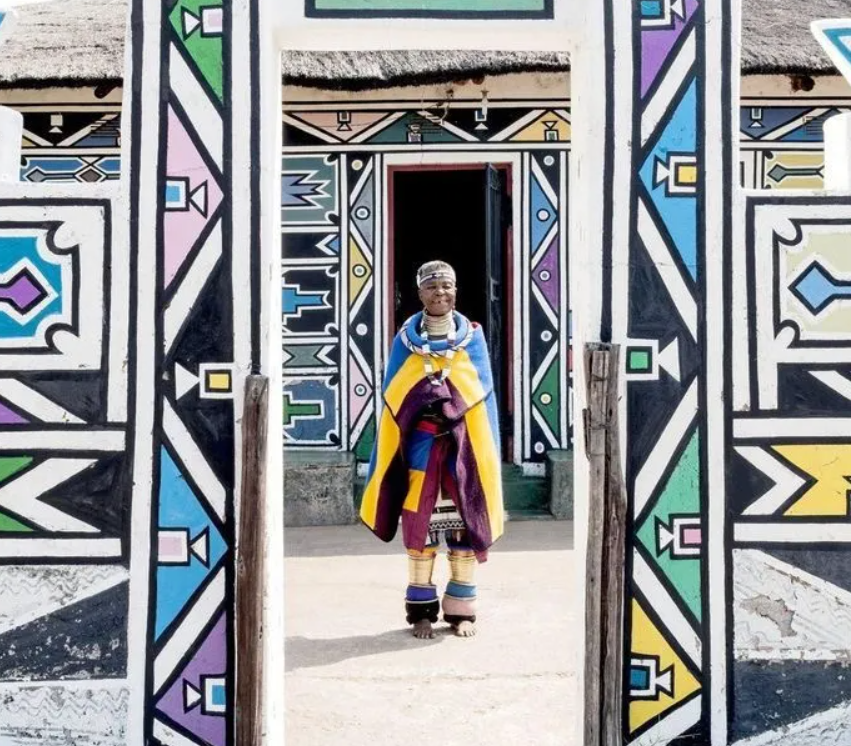
Men wear more clothing made from animal skins and in rituals they wear accessories given to them by their wives. After getting married, women wear umaphotho, long goat skin aprons decorated with white beads. They also have great architectural art where women are responsible for the geometric murals in houses, following linear patterns.
Women paint their houses with the same designs as their clothes. These murals are a cultural resistance after the 1883 Boer defeat, who was not just a military defeat-was a political and culture rupture. These paintings portray women as nurturers of Ndebele cultural identity.
The designs of their clothes are a reinforcement of their culture and identity, and even if the beads were just decoration for the Boer, they were a reminder of their ancestors, their people and land.
Ndebele fashion is architectural — the same geometric logic used to paint houses is used to design clothing. This makes Ndebele culture one of the few in the world where fashion, architecture, and identity share a single visual grammar.
The big ornaments they wear are almost all made from goat.
The colour and patterns make a huge difference in the ndebele with their vibrant colours conveying a narrative of pride and dignity, where they also use colour as a guide. These attires represent continuing to honour their ancestors and survival skills after so many years of displacement, which is why they are so distinctive and expressive; seeing them, it would be hard to forget their attire, history and name. To my eye, it is one of the most abstract pieces of wearable art I have seen, making the term 'modern art' obsolete since they have been wearing these ornaments for decades, or even serving as a source of inspiration for the abstract art we know today.