EAST AFRICA
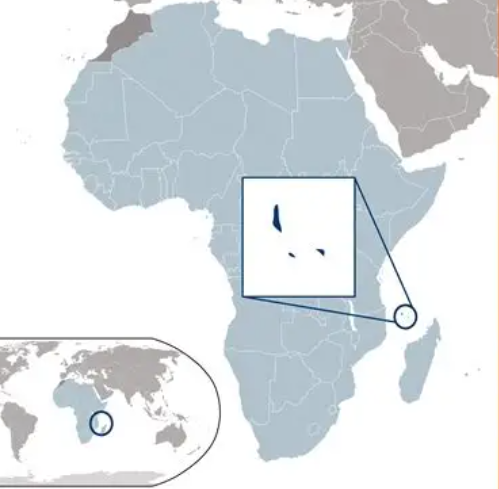
Comoros are within East Africa or the Indian Ocean East African states because of shared trade routes, migration patterns, and Islamic Swahili heritage.
Composed of three main islands—Grande Comore, Mohéli, and Anjouan
Traditional attire is a blend of African and islamic influences. Comoros attire evolve over centuries. Bantu being their first influences where these garments were primarily made of natural material like bark cloth, leather and animal skins reflecting the need of an agrarian lifestyle.
As traders started to arrive comorian clothing were influenced by islamic dress codes, emphasizing modesty and covering.
The kanga and the djellaba gaing popularity.
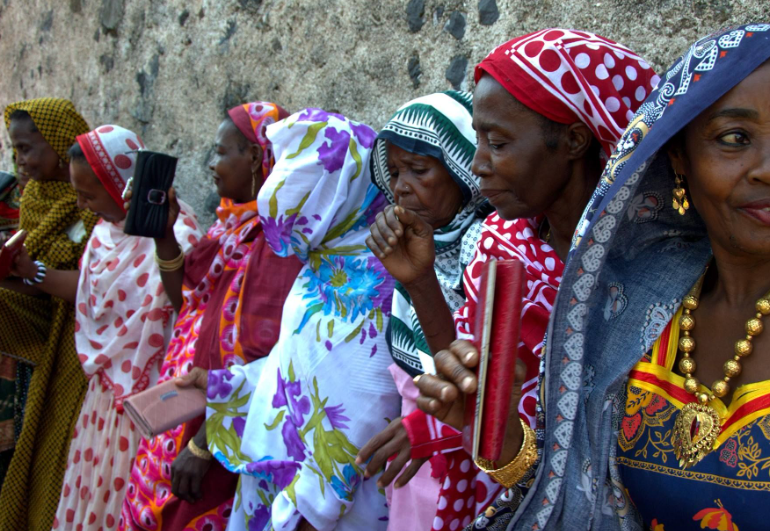
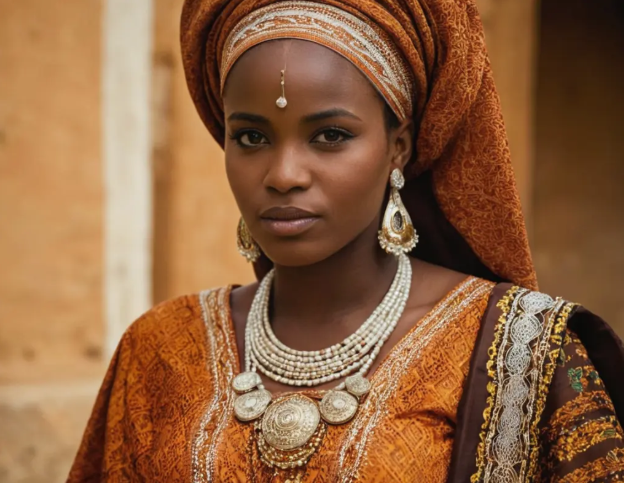
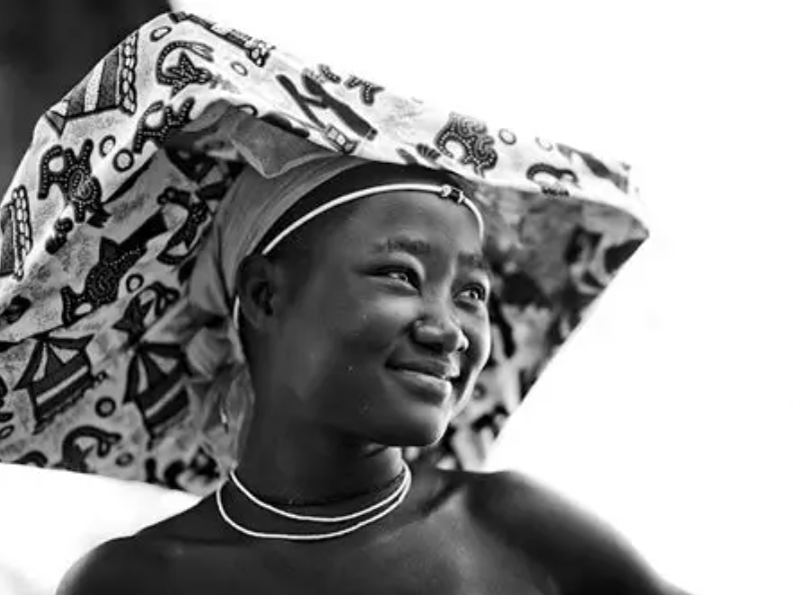
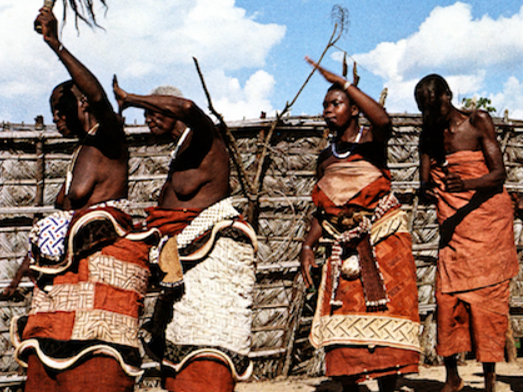
Woman attire includes the kanga, a rectangular cloth worn as shawl, head covering or skirt often adorned with Swahili proverbs with the chiromani cloth wrapped around the body with embroidery and bold patterns. The ashijab and khmissa, caps that covers the hair and neck, wear for essential modesty.
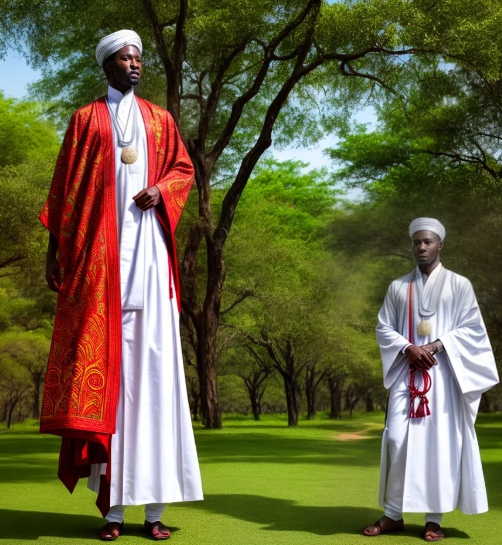
Men wear the kanzu, a long, loose tunic that reaches down to the ankles. Made from cotton or linen. The kanzu provides comfort and practicality, is often worn with a kofia, a traditional cap that covers the head, symbolizing respect and devotion.
In religious ceremonies and important events they wear the kikoi wrapped around the waist in bright colours, and a cotton t-shirt called salouva.
The kanga embodies the strength, resilience, and resourcefulness of Comorian women where the proverbs symbolize wisdom and cultural beliefs.
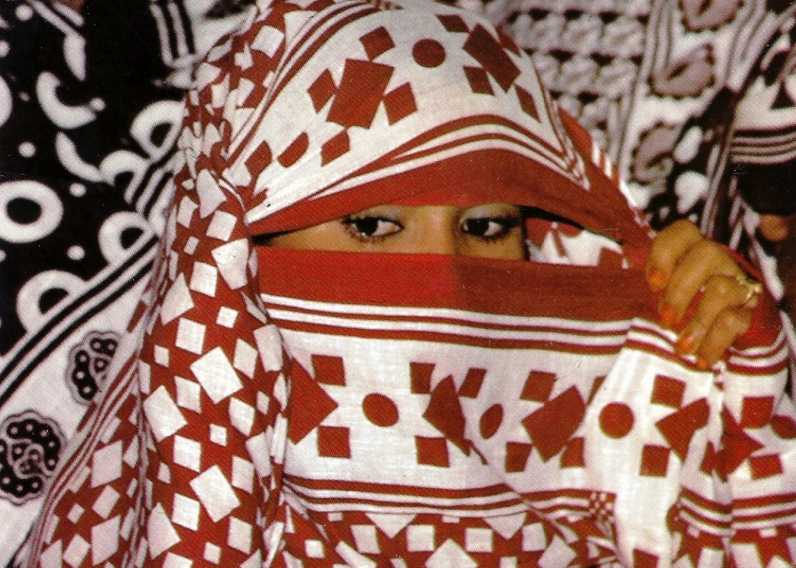
The buibui reflects modesty and privacy.