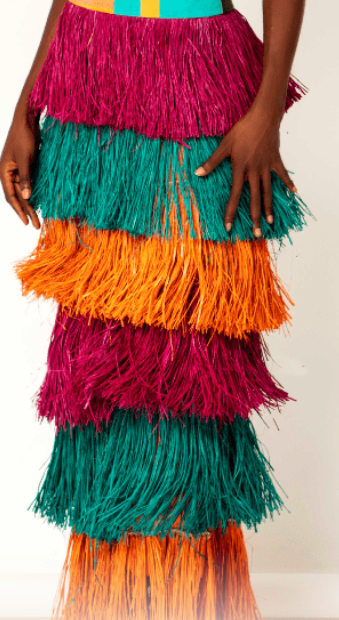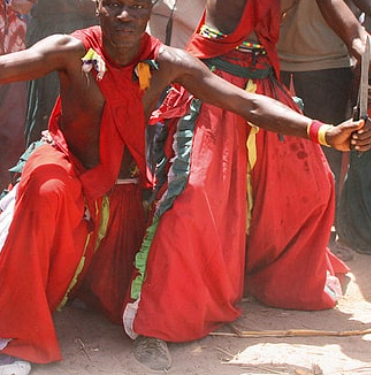
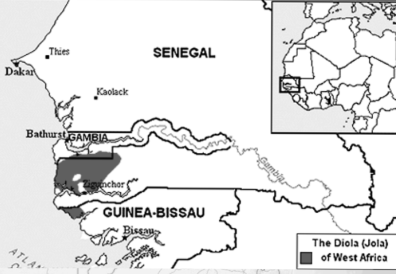
Karokinka are a subgroup of the larger Jola/Ajamat peoples of Senegal, Gambia and Guinea-Bissau; their origins trace back to the first inhabitants of the Casamance river basin. A society based on egalitarian family structures, rice cultivation, fishing and palm wine production, blending spirituality practice without ecological taboos. For rituals, they wear skirts made of palm fibre crafted from raffia, which can be dyed in laterite red, charcoal or yellow ochre.
They believe the movement of the fibre is a symbolic act to activate their ancestors
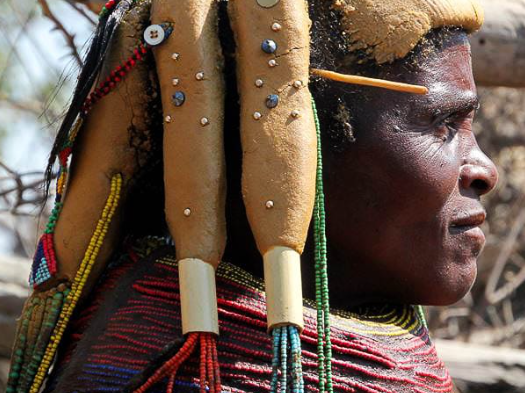
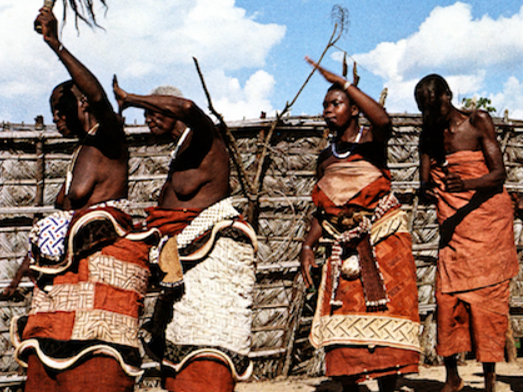
Cowrie shells and beaded belts are also used on these occasions, worn by young women at festivals and in bridal attire. The ritual clothing is considered one of the most dramatic in West Africa, where the person is unrecognizable and fully covered in raffia, representing a forest spirit that moves very quickly and gives a dazzling display called Kumpo.
White kaolin — purity, spiritual protection
Red laterite — earth, vitality, womanhood
Charcoal black — mystery, forest spirits
Blue — river spirits
Yellow — harvest and fertility
Historians, poets, musicians and entertainers
The base of a Karokinka woman's attire is a layered, rhythmic silhouette made of raffia, cloth and beads where the skirt communicates through movement creating sound with the movement of the skirt.
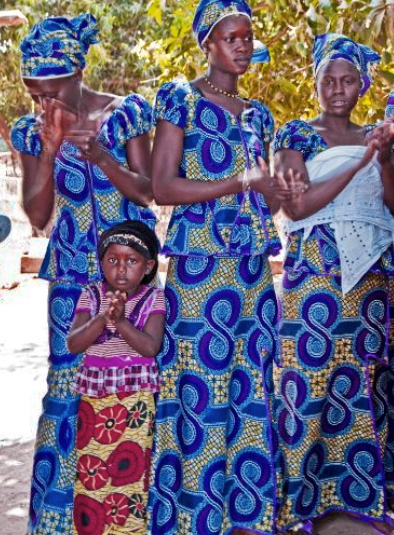
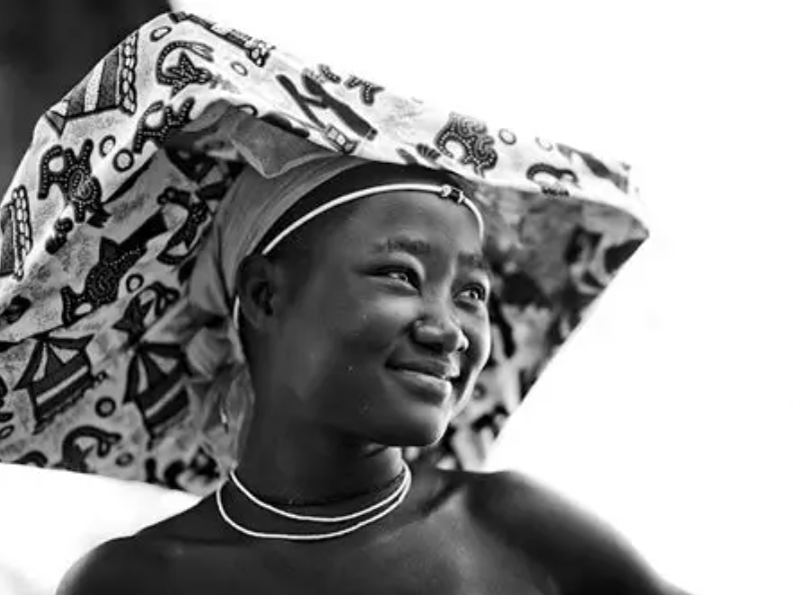
In their daily clothing, they wear indigo or earthy tone fabrics, with a few pieces of jewellery and simple headscarves. Textiles usually have circular, rectangular and also floral patterns.
Fertility, protection, prosperity and ancestral blessings.
Minimal cloth, maximal symbolism, and materials that activate during dance.
The men's clothing is powerful, rhythmic and connected to the cosmology of the forest spirits, built around earth-based materials. They wear ornaments on their ankles, heavy metal rings that make noise when dancing, symbolising strength, masculinity and connection with the spirits. In their daily wear, they usually wear wrapped cotton fabrics or simple trousers paired with headscarves or hats.
In their daily wear, they usually wear wrapped cotton fabrics or simple trousers paired with headscarves or hats.
One of the garments with the most history, as they convey through movement, opening a portal to the spiritual world. Like poets and storytellers, they carry a great strength and responsibility to keep the stories and movements intact as part of that great identity.
It's one of the attires with the least photographic coverage, yet still one of the most significant.